
Close
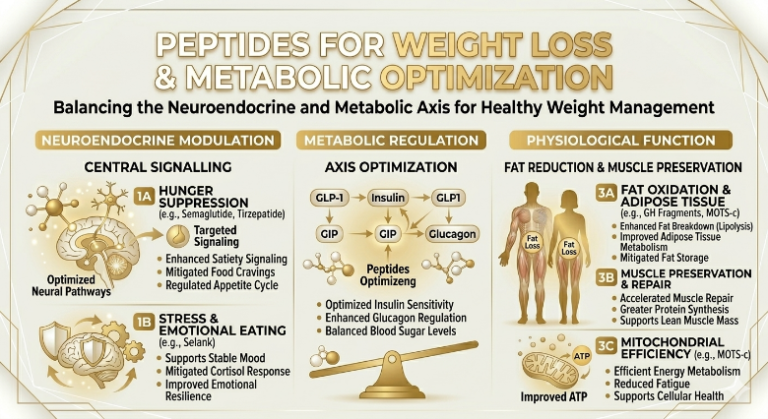
Weight loss and metabolic peptides are short chains of amino acids that act as precision signaling molecules to optimize the body’s internal chemistry. Unlike broader stimulants, these peptides mimic naturally occurring hormones to target specific biological pathways, such as the regulation of hunger, insulin sensitivity, and fat metabolism. By binding to specialized receptors, they can signal the body to prioritize burning stored adipose tissue for energy, increase the production of growth hormones, or slow gastric emptying to enhance satiety. This targeted approach allows for «metabolic optimization,» helping to reset the body’s set point and improve body composition at a cellular level.
Incretin Mimicry (Semaglutide/Tirzepatide): These peptides function as GLP-1 and GIP receptor agonists, mimicking the hormones naturally released after eating. By slowing gastric emptying and signaling the brain’s «satiety centers,» they effectively silence «food noise» and shift the body’s caloric preference toward stored energy.
Lipolytic Signaling(AOD-9604 /Fragment 176-191): These are specifically engineered to mimic the fat-burning (lipolytic) region of human growth hormone. They signal the body to mobilize adipose tissue—specifically in stubborn areas—without affecting blood sugar levels or causing the systemic growth associated with full-chain GH.
Insulin Sensitization (MOTS-c / Tesamorelin): By acting directly on mitochondrial DNA and visceral fat stores, these peptides improve how the body partitions nutrients. They «prime» the cells to utilize glucose for fuel rather than storing it as fat, effectively repairing the metabolic «brakes» often damaged by chronic inflammation or poor diet.
This category of optimization goes beyond simple caloric deficits; it is about biochemical recalibration. By addressing the underlying hormonal triggers of obesity—such as leptin resistance and insulin dysfunction—these peptides allow the body to exit «survival mode» and enter a state of metabolic flexibility. This ensures that weight loss is derived from adipose tissue while lean muscle mass is preserved, creating a sustainable shift in body composition and a long-term defense against metabolic rebound.
Retatrutide: A triple-agonist peptide researched for weight management.
Tirzepatide: A dual-acting peptide studied for glycemic control and satiety signaling.
GLP Peptides in Mexico: Research insights into compound accessibility and glucose regulation pathways.
AOD-9604: A modified fragment studied for its specific influence on lipid metabolism.


• What peptides really are and how they function inside the body
• The logic and structure behind high-performance MyosFit stacks
• Fat loss, muscle recovery, sleep, longevity, and skin optimization strategies
• How advanced stacks are engineered, not guessed
• What defines clinical-grade peptides,s and why most products fail that standard
The date has not been announced yet – join the early interest list to be notified first when registration opens.
Signup for news and special offers!
You have successfully joined our subscriber list.