
Close
Ready to explore TB-500 in Mexico for systemic recovery and advanced regenerative protocols?
TB-500 is a synthetic peptide derived from Thymosin Beta-4 (Tβ4), a naturally occurring protein involved in cellular repair, regeneration, and migration. It is widely studied for its role in tissue recovery and systemic healing processes.
Interest in TB-500 in Mexico has increased significantly, particularly among those exploring recovery optimization and peptide-based regenerative strategies. If you’re new to this category, start with the Peptide Education Hub, along with foundational guides like What Are Peptides and Peptides vs Hormones to understand how these compounds function.
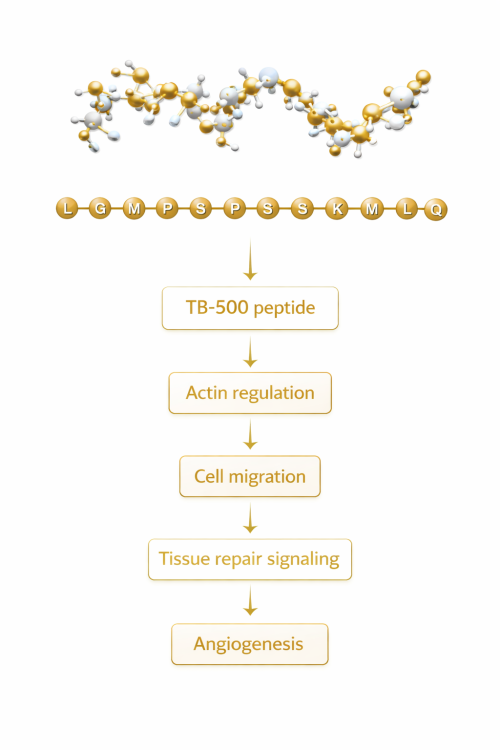
TB-500’s primary mechanism involves actin regulation, a process critical for cell movement and structural integrity. By binding to actin, TB-500 enables repair cells to migrate more efficiently to damaged tissues.
Research on Thymosin Beta-4 highlights its role in tissue repair and regeneration signaling
PubMed: https://pubmed.ncbi.nlm.nih.gov/22074294/
This process supports:
Additional research demonstrates involvement in regenerative signaling pathways tied to recovery and healing
PubMed: https://pubmed.ncbi.nlm.nih.gov/15565145/
TB-500 is studied across several areas of regenerative science.
TB-500 is commonly explored in research related to muscle strains, ligament damage, and tendon injuries due to its role in cellular repair signaling.
By supporting tissue remodeling and reducing adhesions, TB-500 may contribute to improved flexibility.
Research suggests involvement in vascular growth and repair processes
PubMed: https://pubmed.ncbi.nlm.nih.gov/17947595/
Its most studied function is the ability to support cellular movement during healing
PubMed: https://pubmed.ncbi.nlm.nih.gov/17947589/
One of the most common comparisons is between TB-500 and BPC-157 in Mexico, as both are frequently studied in recovery-focused protocols.
Rather than competing, they are often used together. In combined frameworks such as the Wolverine Stack, TB-500 facilitates whole-body repair while BPC-157 targets specific injury sites.
The GHK-Cu Glow Stack is designed for «inside-out» rejuvenation. While TB-500 and BPC-157 manage underlying tissue inflammation, GHK-Cu (Copper Peptide) acts as the primary driver for aesthetic remodeling, stimulating collagen and hair follicle health.
Explore the Glow Protocol Collection designed to support recovery, collagen remodeling, and long-term tissue health.
Maintaining muscle mass and pain-free mobility is essential for longevity, as explored in [Longevity and Strength: Why Muscle Matters for Aging]. However, peptides cannot work in a vacuum.
If a subject is in a state of endocrine decline—common during menopause or andropause—the cellular «machinery» for repair is essentially turned off. As detailed in our research on [Menopause and Hormone Health: Restoring the Biological Baseline], restoring foundational hormones like testosterone and estrogen via TRT or HRT «reignites» the body’s repair capacity. Once this foundation is optimized, the introduction of a signaling peptide like TB-500 can produce dramatically more effective results.
Search data shows strong interest in how long TB-500 is used.
In research-based contexts, TB-500 is typically evaluated in cycles rather than continuous use.
This cyclical approach allows observation of recovery progression and avoids overstimulation of signaling pathways.
Pricing for TB-500 in Mexico varies depending on:
Higher-quality peptide formulations generally reflect stronger testing, traceability, and compliance standards.
Lower-cost options often indicate reduced verification, which can impact reliability in research contexts.
TB-500 is rarely studied in isolation. It is often evaluated within multi-compound frameworks.
For example, combining TB-500 with GHK-Cu allows for both deep tissue repair and surface-level regeneration, including collagen support.
When paired with BPC-157, TB-500 supports systemic recovery while BPC-157 targets localized repair pathways, forming the foundation of the Wolverine Stack.
These combinations reflect how Regenerative Peptides are used in advanced frameworks—each compound addressing a different phase of healing.
This approach also connects to broader performance strategies such as Muscle Longevity, where tissue resilience and recovery capacity are key.
TB-500 exists within research and professional-use categories in Mexico rather than standard pharmaceutical classification.
Availability depends on:
TB-500 is one of the most studied peptides for cellular migration and tissue repair.
Its role in regenerative frameworks includes:
However, outcomes depend on:
For those exploring TB-500 in Mexico, available options vary depending on formulation quality and sourcing standards.
In many regenerative-focused approaches, TB-500 is evaluated alongside compounds such as BPC-157 and GHK-Cu, reinforcing a multi-pathway approach to recovery rather than relying on a single mechanism.
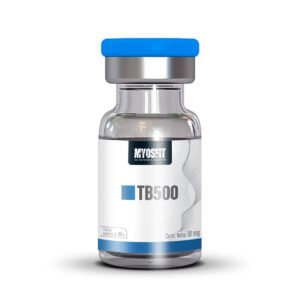
Explore TB-500 in Mexico, formulated for systemic recovery, cellular repair, and advanced regenerative research, with a focus on purity, documentation, and sourcing transparency.
In research and professional-use contexts, TB-500 is typically evaluated in structured cycles rather than continuous use. A common research approach involves using TB-500 for approximately 6 to 12 weeks, followed by a break or “washout” period. This allows researchers to observe recovery progression and avoid overstimulation of biological signaling pathways. The exact duration depends on the context of use, the type of tissue being studied, and the overall regenerative framework being applied.
TB-500 is studied primarily for its role in cellular migration, tissue repair, and regenerative signaling. It is commonly explored in research related to muscle recovery, tendon and ligament repair, flexibility improvement, and inflammation modulation. Because it acts as a signaling peptide rather than a hormone, TB-500 supports the body’s natural repair mechanisms instead of directly forcing biological changes.
TB-500 and BPC-157 are often compared, but they serve different roles in regenerative research. TB-500 is associated with systemic cellular migration, meaning it helps coordinate repair processes throughout the body. In contrast, BPC-157 is studied for localized healing, particularly in tendons, ligaments, and gastrointestinal tissues. In many advanced peptide frameworks, they are used together to create a complementary, multi-pathway approach to recovery.
The cost of TB-500 in Mexico varies significantly depending on purity, manufacturing standards, and supplier transparency. Higher-quality formulations that include proper documentation, testing, and traceability typically cost more than lower-tier options. Pricing differences often reflect quality control and sourcing standards rather than just branding, making supplier verification an important factor when evaluating options.


• What peptides really are and how they function inside the body
• The logic and structure behind high-performance MyosFit stacks
• Fat loss, muscle recovery, sleep, longevity, and skin optimization strategies
• How advanced stacks are engineered, not guessed
• What defines clinical-grade peptides,s and why most products fail that standard
The date has not been announced yet – join the early interest list to be notified first when registration opens.
Signup for news and special offers!
You have successfully joined our subscriber list.