
Close
Looking to explore peptides for muscle growth, recovery, and longevity in Mexico? Start by understanding how different compounds support performance and long-term health.
Peptides for muscle growth in Mexico are best understood within the broader context of peptide science and signaling pathways. If you’re new, start with the Peptide Education Hub to understand how different compounds support recovery, metabolism, and performance.
As we grow older, our physical capacity naturally declines. Strength is absolutely crucial for longevity because it directly correlates with functional independence. Having adequate muscle strength prevents devastating falls, which are a leading cause of accidental death, immobility, and rapid health decline in the elderly. Biomarkers like grip strength and leg strength are proven to be among the most accurate predictors of biological aging and overall mortality risk. To stay out of a nursing home and maintain your freedom, you must be strong. Grip Strength as a Predictor of Mortality (PubMed)
For optimal longevity and health, we must recognize muscle as an active endocrine organ. Every time you contract your muscles during resistance training, they secrete specialized proteins called «myokines.» These travel throughout the body to reduce systemic inflammation and support bone density. Furthermore, skeletal muscle is the primary site for glucose disposal. By maintaining metabolically active muscle, you reduce the risk of Insulin Resistance, type 2 diabetes, and metabolic syndrome. Muscle as an Endocrine Organ: Myokine Signaling (PubMed)
Sarcopenia is the age-related loss of muscle mass, strength, and function. It can begin as early as your 30s and accelerates with inactivity.
Over time, it contributes to:
Preventing sarcopenia requires:
Research on sarcopenia and aging supports these findings (PubMed).
As natural growth hormone production declines with age, building and maintaining muscle becomes more difficult.
Muscle growth peptides and recovery peptides are studied for their ability to support:
Unlike traditional hormones, peptides are researched for their ability to activate targeted biological pathways rather than broad systemic effects.
Peptides are often misunderstood as primary drivers of muscle growth. In reality, they are supportive tools.
Muscle growth depends on:
Peptides may enhance recovery and signaling, but without proper training stimulus, their impact is limited.
The most effective approach combines:
👉 Learn more: AOD-9604 Fat Loss Peptide Guide
👉 Learn more: BPC-157 Guide | TB-500 Guide
👉 Learn more: Selank Guide | PT-141 Guide
Not all peptides serve the same role.
Many individuals combine these approaches to:
Choose your goal and explore the most relevant peptide categories and guides:
Muscle growth & strength
CJC-1295 and Ipamorelin are commonly studied for growth hormone support and recovery. Learn more about CJC-1295 and Ipamorelin.
Fat loss & recomposition
Tesamorelin and AOD-9604 are researched for fat metabolism and body composition. Learn more about Tesamorelin and AOD-9604.
Injury recovery
BPC-157 and TB-500 are associated with tissue repair and recovery pathways. Learn more about BPC-157 and TB-500.
Performance & cognition
Selank and PT-141 are studied for stress regulation and neuroendocrine performance. Learn more about Selank and PT-141.
Explore peptide options based on your specific goal:
Modern longevity science supports a muscle-first approach to health.
Gabrielle Lyon, a leading physician in metabolic health, emphasizes that muscle is one of the most important regulators of long-term health.
Her “muscle-centric medicine” framework highlights that muscle plays a key role in:
In many cases, muscle quality is a stronger predictor of long-term health outcomes than body weight alone.
Interest in muscle growth peptides in Mexico continues to rise, particularly around injectable and research-grade compounds.
Key factors when evaluating peptides:
Price alone is not a reliable indicator of quality. Higher-quality peptides often reflect stronger manufacturing and testing standards.
Muscle acts as:
Combining resistance training, nutrition, recovery, and targeted peptide strategies creates the strongest foundation for long-term performance and health.
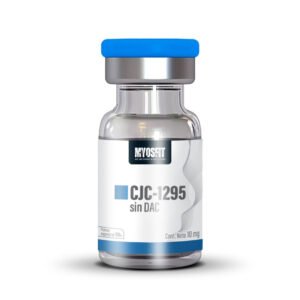
Ready to explore muscle growth peptides and recovery compounds in Mexico, with shipping to the USA.
The most commonly researched peptides for muscle growth in Mexico include growth hormone–supporting compounds such as CJC-1295 and Ipamorelin, which are studied for their ability to increase IGF-1 signaling and support muscle protein synthesis. Recovery peptides like BPC-157 and TB-500 are often explored alongside these to improve tissue repair and training consistency. The best option depends on whether your primary goal is hypertrophy, recovery, or overall performance.
Peptides in Mexico exist within a range of regulatory categories depending on their formulation, intended use, and distribution channel. Many peptides are accessed through research or professional-use frameworks rather than standard over-the-counter pharmaceutical systems. Availability and compliance depend on sourcing practices, documentation, and how the compounds are classified.
Peptides such as Tesamorelin and AOD-9604 are commonly researched for their role in fat metabolism and body recomposition. While their primary focus is fat loss, they may help preserve lean muscle mass when combined with proper training and nutrition. These are often used alongside muscle-building peptides in structured approaches.
Muscle growth peptides primarily influence hormonal pathways, such as growth hormone and IGF-1 signaling, which support hypertrophy and strength. Recovery peptides, on the other hand, are studied for their role in tissue repair, inflammation modulation, and healing processes. Many individuals combine both types to support performance and reduce downtime between training sessions.
No. Muscle growth peptides do not replace resistance training or proper nutrition. Muscle development is primarily driven by progressive overload, protein intake, and recovery. Peptides are studied as supportive tools that may enhance signaling pathways related to recovery and hormone function, but without training stimulus, their effectiveness is limited.


• What peptides really are and how they function inside the body
• The logic and structure behind high-performance MyosFit stacks
• Fat loss, muscle recovery, sleep, longevity, and skin optimization strategies
• How advanced stacks are engineered, not guessed
• What defines clinical-grade peptides,s and why most products fail that standard
The date has not been announced yet – join the early interest list to be notified first when registration opens.
Signup for news and special offers!
You have successfully joined our subscriber list.